
Black History Month Spotlight on Comic Artist Michael Douglas
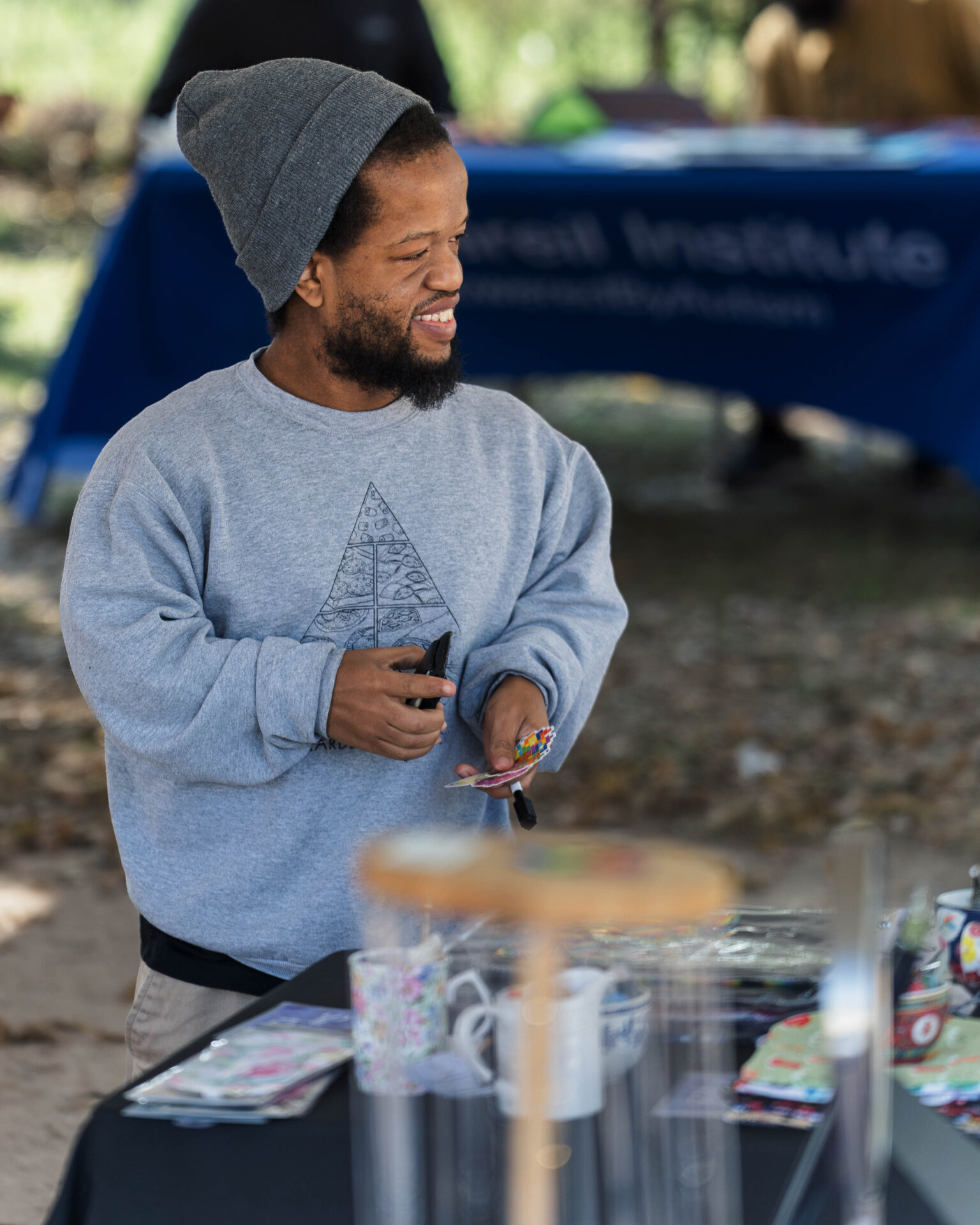
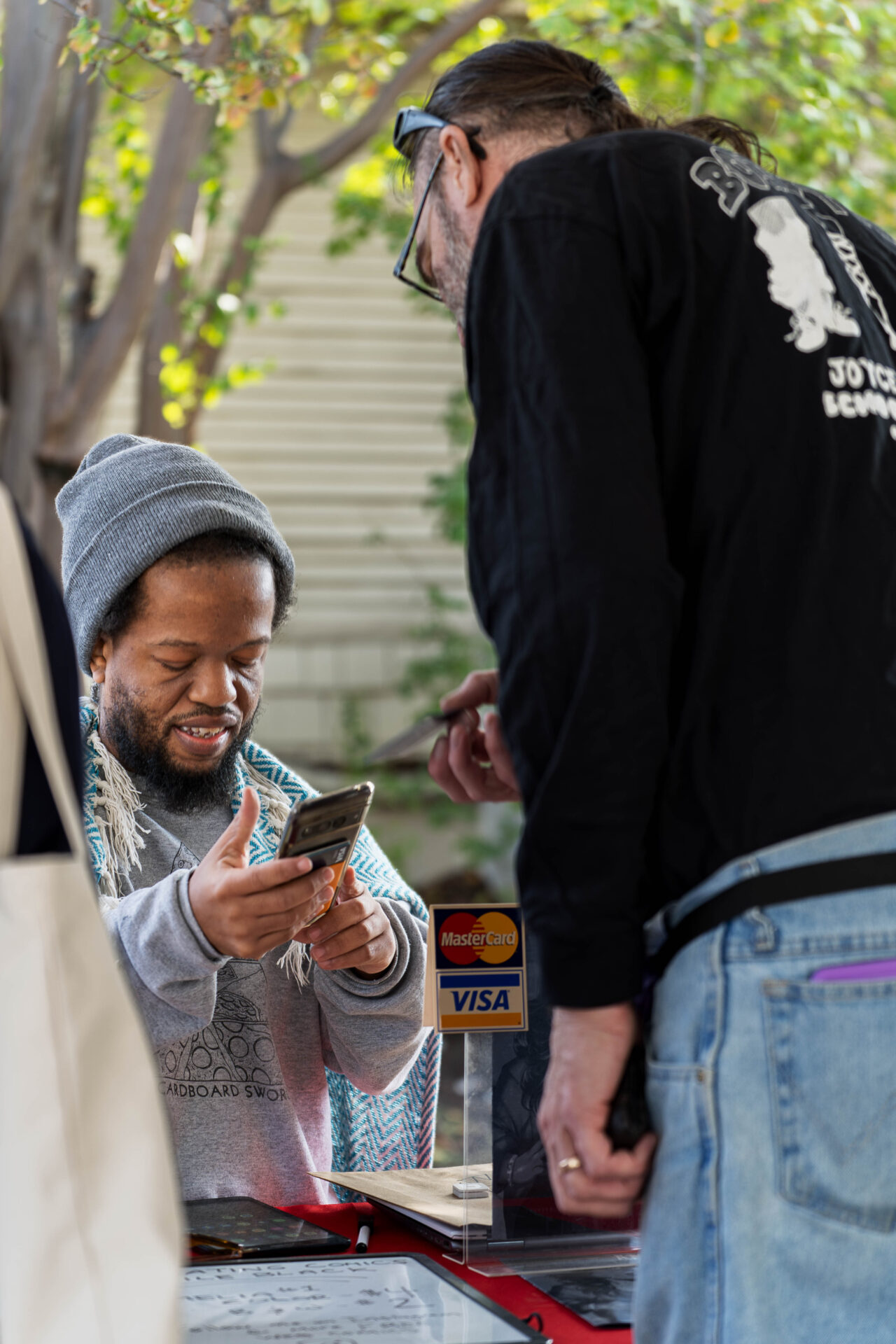
February is Black History Month, and we were honored to meet Michael Douglas, a comic book writer based in San Antonio, Texas recently after joining our December Beyond Art Market, where we had the opportunity to learn more about his creative process and the experiences that shape his work.
Read more below, and be sure to give him a follow on Instagram to see more of his incredible storytelling.
Q&A with Art Spark Texas
Q: To start at the beginning, how did you first get into comics, and what eventually led you to creating your own stories?
Douglas: As a kid, my brother was an avid reader and collector of comic books. I remember thumbing through the pages of his X-Men, Ninja Highschool, Teen Titans, and Batman comics, completely amazed by the illustrations, bold color work, and explosive lettering.
It wasn’t until around 2014 that I rediscovered my love for comics. I spent countless hours catching up on older storylines before eventually getting current and becoming a Wednesday Warrior at my local shop, Laughing Ogre in Columbus, OH. From there, I went on to start a podcast called Uncanny Nerdverse, where my co-host and I talked about X-Men comics and more.
Over time, I began to step away from mainstream comics. I moved to San Antonio, TX and started creating my own stories, commissioning artists to bring my scripts to life. Within the past year, I’ve finally returned to catching up on so many incredible comics from other creators. Veil Vol. 1 was my favorite graphic novel released last year.
Q: As your creative journey continued, what does “Creating Comics While Black” mean to you personally as an artist and storyteller?
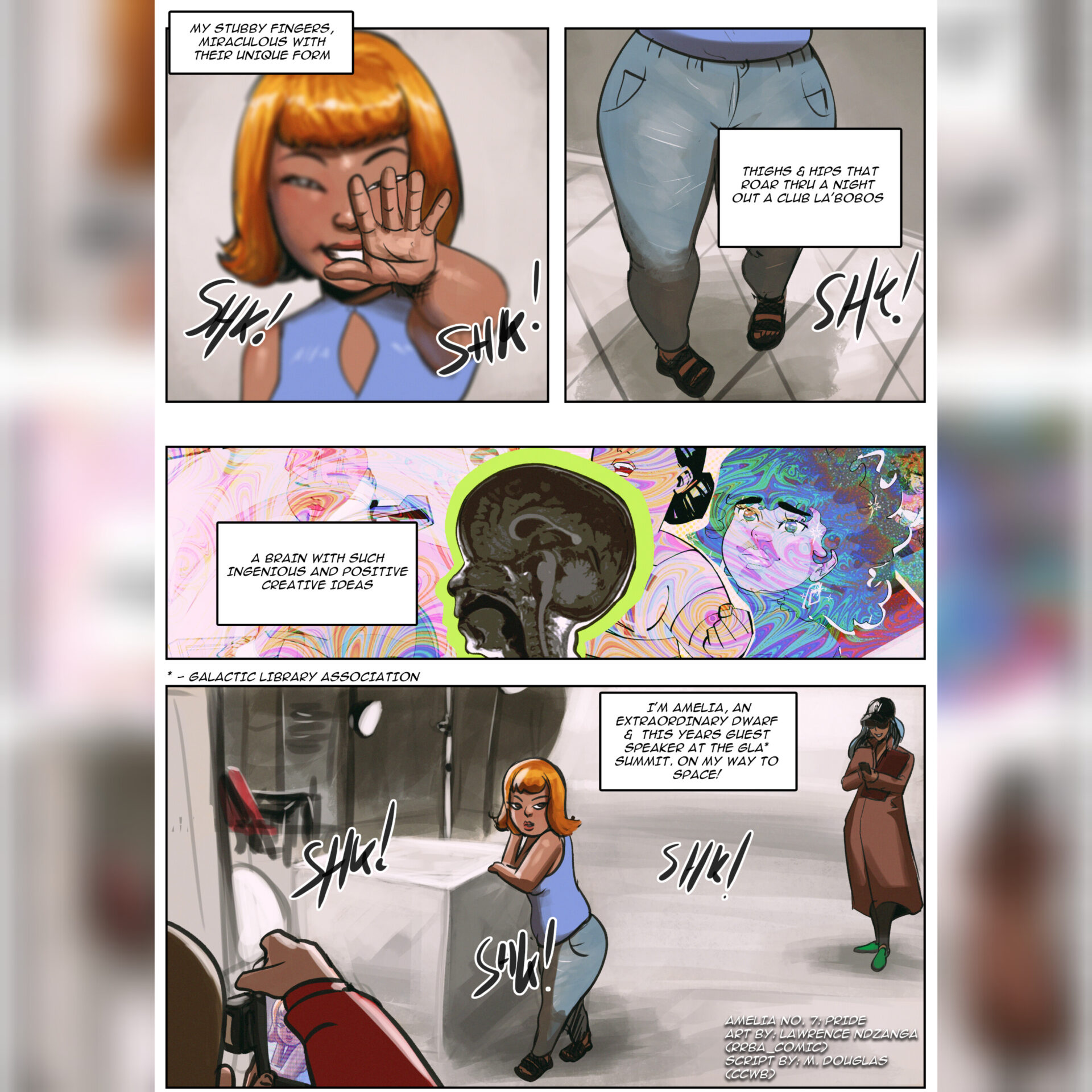
Douglas: Living my life every day as a Black man with dwarfism, I’ve developed a deep passion for the artistry of comic books and a desire to create my own. It also means learning how to create on a budget—making sure the bills are paid before commissioning artists.
Accessibility is important to me as well. I make my comics available digitally for free, ensuring readers from around the world can access them. When it comes to storytelling, people of color and those with disabilities will always be prominently represented in my work.
Q: Why do you feel representation in comics is still important today, especially for Black readers and young artists?
Douglas: Without it, comics will continue to shut out potential new readers, writers, artists, shop owners, and podcasters - people who could otherwise help build positive, inclusive communities within their local scenes.
Q: How do your lived experiences influence the characters or worlds you create?
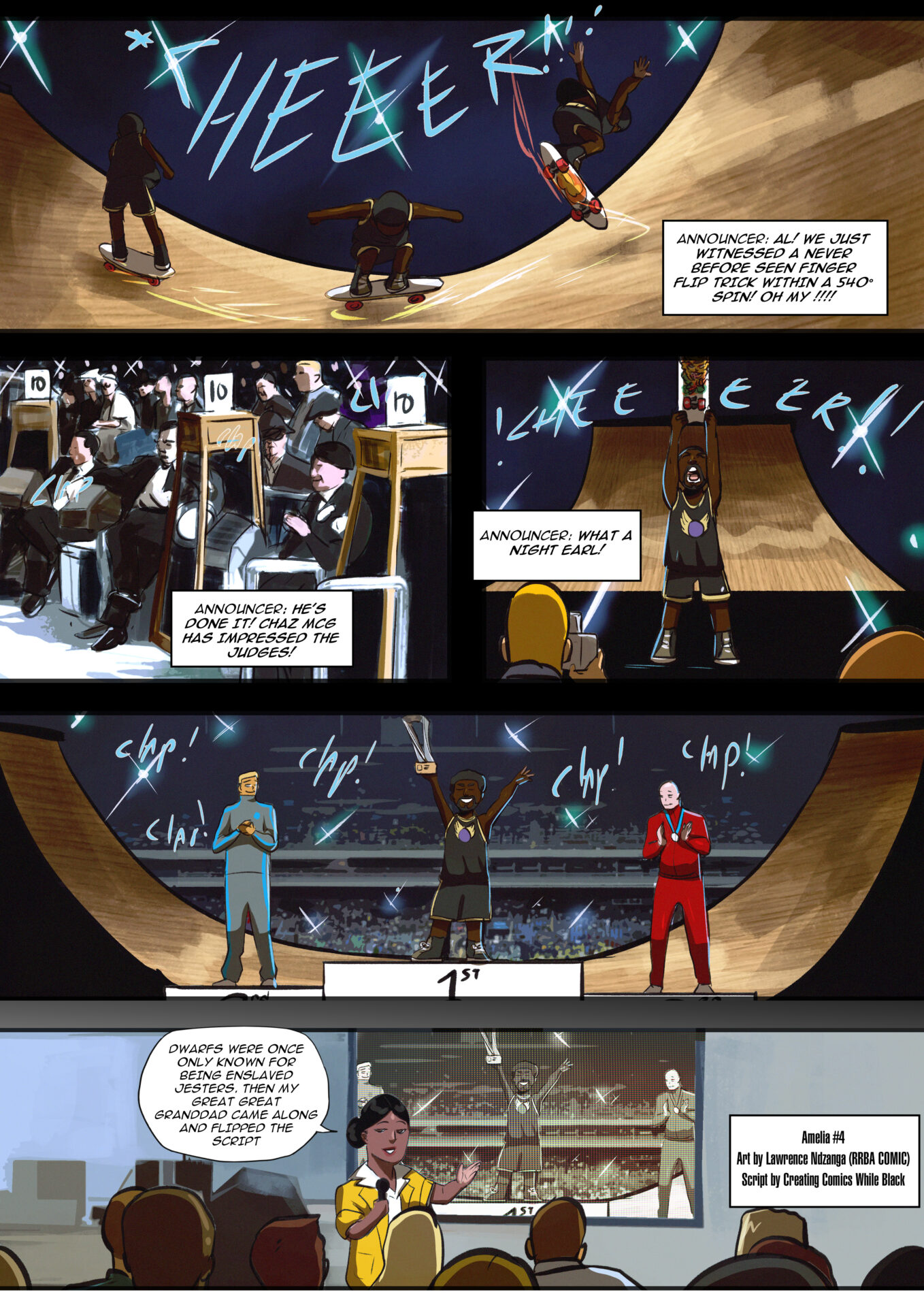
Douglas: I might pull something from my past, toss it into the creative blender, and give it an escapist spin. Or I may think back to OG skateboard legend Chaz McGee from my hometown and blend multiple concepts into one.
Q: What kinds of stories do you feel are missing or underrepresented in mainstream comics today?
Douglas: Characters with disabilities and superpowers matter to me. I’m still patiently waiting for Marvel Comics to release a Puck mini-series. Marvel has also kept Anna Maria Marconi shelved—two characters with dwarfism, both portrayed in a positive light, both sidelined.
Q: What are some of the challenges and freedoms that come with working independently as a Black comic creator?
Douglas: Affording commissioned artists while still making sure my living expenses are covered is always a balancing act. Finding reliable artists who truly sync with you isn’t easy, and I’ve been exceptionally blessed with the artists I’ve had the pleasure of working with. When it comes to creative freedom, I can do whatever I decide and create my own destiny.
Q: How has community or collaboration with other creators shaped your work?
Douglas: Outside of publishing comics, the community has shaped my desire to give back to the local creative scene. Collaborating with the artists I commission has also introduced me to their incredible stories, which continue to inspire me.
Q: When someone finishes reading one of your comics, what do you hope they take away from the experience?
Douglas: Take away: Aye! That was fun!
Q: What advice would you give to aspiring Black and/or disabled artists who want to tell their own stories but aren’t sure where to start?
Douglas: Don’t be afraid to turn that blank page into a comic book script. Don’t be afraid to reach out to your peers for advice, artist referrals, community-building, co-projects, or events.
Q: Finally, what’s next for you creatively, and what are you excited to explore in the future?
Douglas: I’m not sure what’s next for me creatively. It continues to evolve and shape itself along the way, and I’m excited to keep exploring authenticity.